Waffles Embroidery Design Review
As a designer who spends half my life staring at stitch charts and the other half testing thread tension on stubborn fabrics, I don’t just look for "cute" when evaluating a new digital asset. I look for viability. Can this design actually be stitched? Will it hold up after ten washes? Does it translate well from a screen to fabric? Today, I’m putting Waffles under that same microscope. This is a retro-style food graphic available as an SVG, EPS, PNG, DXF, and PDF download, marketed toward cut machines and vinyl decals, but its visual language screams potential for textile work.
The premise here is simple: a popular food name rendered in a nostalgic, retro aesthetic. For the craft business owner or the Etsy seller looking to expand their catalog beyond standard typography, this falls squarely into the realm of T-Shirt Designs and general Graphics that can be adapted. But does it work as a machine embroidery design? Let’s break down the practical realities of using this file in real-world projects.
First Impressions and Visual Personality
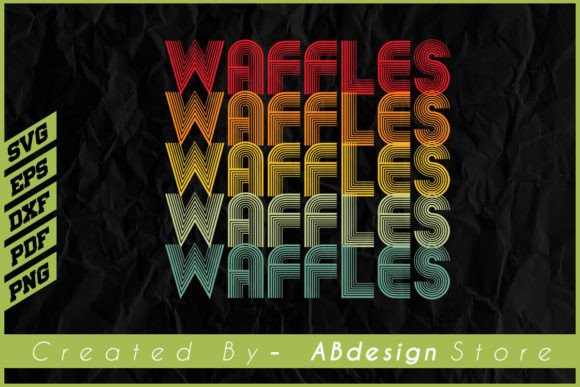
The moment you open the preview of Waffles, the mood is set. It isn’t trying to be high-fashion or minimalist. It leans heavily into comfort, nostalgia, and approachability. The retro font choice suggests a diner vibe—think sunny breakfasts, cozy kitchens, and weekend mornings. This specific personality makes it an excellent candidate for personalized gift markets. It feels warm without being overly sentimental, which is a rare balance in design.
From a layout perspective, the text-centric nature of the design is both a blessing and a challenge for embroidery. Unlike complex illustrative scenes, this relies on the strength of its lettering. If you are planning to use this for custom apparel like hoodies or heavy cotton tees, the boldness of the retro style will likely survive the digitization process well. However, if you are aiming for delicate baby embroidery on onesies, you need to be careful. The thick lines typical of retro fonts can sometimes overwhelm small areas, leading to a bulky feel rather than a crisp finish.
Real-World Application: Where Waffles Fits Best
I recently imagined this design being used for a batch of holiday gifts. Specifically, a set of embroidered kitchen towels or aprons for a hostess present. In this scenario, Waffles performs exceptionally well. The theme aligns perfectly with kitchen decor, and the retro aesthetic complements farmhouse or modern-rustic interior styles that are currently dominating home goods trends. When stitching this onto a tea towel, the contrast between the thread and the natural linen or cotton fabric would create a professional, boutique-level look.
Another strong use case is for tote bag design projects. A canvas tote featuring this design could easily become a bestseller for a craft fair vendor. The design is legible from a distance, which is crucial for bags carried around markets or festivals. It also works beautifully as an embroidered patch that can be ironed or sewn onto denim jackets or backpacks, adding a touch of playful personality to everyday wear.
For the Etsy seller or small shop product creator, versatility is key. Because the source files include SVG and DXF, you aren’t limited to just stitching. You can use the vector data to create vinyl decals for tumblers or laptops, effectively doubling your product offerings from a single purchase. This cross-platform utility adds significant value to the digital download aspect.
Technical Considerations and Potential Pitfalls
While the concept is solid, not every application is created equal. There are specific scenarios where Waffles requires careful handling to avoid a mediocre finished product.
- Small Hoop Sizes: If you attempt to stitch this in a 4x4 hoop, the lettering may become cramped. Ensure your digitizer (or the provided file settings) accounts for adequate spacing between letters to prevent thread breaks or tangling.
- Textured and Stretchy Fabrics: Avoid placing this design on highly textured fabrics like boucle wool or thin, stretchy jersey knits without proper stabilization. The retro style relies on clean lines; distortion from fabric movement will ruin the aesthetic. Always use a sturdy stabilizer to keep the stitches flat and smooth.
- Dense Stitch Areas: While this is primarily text, if the design includes decorative elements or thick fill stitches, check the stitch density. Too much density on a lightweight fabric can cause puckering. If you are using this for sweatshirt embroidery, the heavier fabric usually handles density better, but always test first.
- Dark Fabric Contrast: On dark backgrounds, ensure you have chosen thread colors that provide sufficient contrast. A light pastel thread might get lost against navy or black fabric, diminishing the impact of the retro design. Conversely, bright neon threads might clash with the nostalgic mood.
Designer’s Checklist Before You Stitch
Before committing this design to a customer’s order or a commercial inventory run, I recommend running through this practical checklist. It saves time, money, and reputation.
- Test on Scrap Fabric: Never assume a design will stitch out perfectly on the final material. Use a scrap piece of the exact fabric you plan to sell. Check how the thread interacts with the weave.
- Review Stitch Density: Zoom in on the digitized version. Are there any areas where the needle will penetrate the same spot too many times? This can lead to needle breakage or fabric damage.
- Check Small Details: Look closely at the corners of the letters. Are they sharp enough? Will they look muddy after washing? If the details are too fine for the intended hoop size, consider simplifying the design or scaling it up.
- Black and White Mockup: Convert the design to grayscale. This helps you see if the composition holds up without relying on color. Good design should be recognizable even in monochrome.
- Confirm Licensing: Since this is a digital embroidery file sold for personal or commercial use, double-check the license terms. Can you sell the finished physical items? Can you use it in your branding? Clarity here prevents legal headaches later.
Final Verdict on Visual Appeal and Product Value
Waffles succeeds because it taps into a universal love for comfort food and nostalgic aesthetics. It doesn’t try to be something it’s not. For the creative entrepreneur, it offers a low-risk, high-reward addition to a product line. It enhances brand consistency for shops focused on home goods, gifts, or casual wear.
The design elevates the perceived value of a handmade product. A plain tote bag becomes a statement piece when adorned with thoughtful, well-executed embroidery. Customers trust brands that pay attention to detail, and a clean, well-stitched Waffles graphic signals professionalism. It’s not just a sticker slapped on a shirt; it’s a crafted element that invites touch and interaction.
In summary, if you are looking for a versatile design asset that bridges the gap between digital graphics and tangible textiles, Waffles is a strong contender. Just remember that the magic happens in the execution. Choose your threads wisely, respect the fabric’s limitations, and always prioritize quality control. When done right, this retro gem can become a staple in your craft business inventory, bringing smiles to customers one stitch at a time.