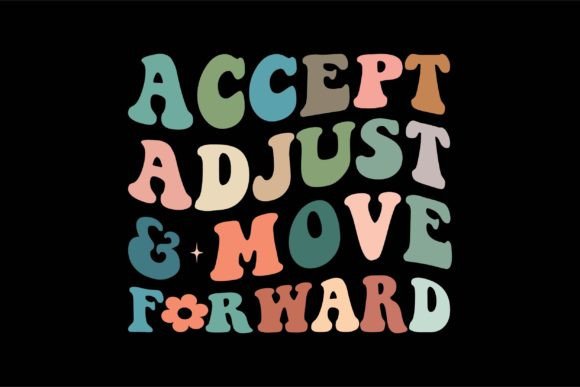
Accept Adjust and Move Forward Embroidery Review
As a designer who spends more time staring at stitch patterns than sleeping, I have learned to trust my gut when evaluating a new digital asset. It is not just about whether the file opens correctly in the hoop; it is about whether the design holds up under the scrutiny of real-world production. Today, I am putting Accept Adjust and Move Forward through its paces. This graphic, categorized broadly under T-Shirt Designs and Graphics, carries a motivational weight that is incredibly common in the current market but difficult to execute without looking cliché. My goal here is to strip away the marketing fluff and look at this embroidery design with the critical eye of someone who needs to sell finished products.
The First Impression: Mood and Visual Personality
When you first load Accept Adjust and Move Forward into your digitizing software or preview window, the immediate takeaway is one of resilience. The typography suggests a retro, groovy, or wavy aesthetic, which aligns perfectly with the vintage craft vibe that dominates platforms like Etsy right now. However, visual appeal on a screen does not always translate to stitching clarity. The layout feels balanced, likely relying on a central focal point that allows for a clean placement on garments. The "motivation" aspect is clear, but as an experienced maker, I am always asking: does this feel authentic or forced?
The design personality leans heavily into the handmade product sector. It feels suited for a boutique branding item or a personalized gift rather than mass-produced fast fashion. There is a warmth to the concept that invites connection. If you are creating items for creative entrepreneurs or hobbyists who value mental health and mindfulness, this theme hits the mark. But we must look closer at the execution details. Does the wavy typography allow for smooth satin stitches, or will it create jagged edges? That is the question that determines if this is a viable commercial embroidery piece.
Real-World Application: Where This Design Shines
I recently considered using Accept Adjust and Move Forward for a custom embroidered tote bag project intended for a local craft fair. The idea was to pair the motivational quote with a sturdy canvas material. In this scenario, the design works beautifully. The bold nature of the text ensures legibility even from a distance, which is crucial for booth traffic. The retro style complements the natural texture of cotton or jute bags, enhancing the artisanal feel.
Beyond tote bags, this embroidery file has strong potential for sweatshirt embroidery. Imagine a heather grey crewneck with the phrase centered on the chest or slightly off-center for a more casual, lived-in look. The wavy typography could be rendered in soft fill stitches to give it a plush, comfortable appearance that matches the fabric’s drape. For baby embroidery projects, such as onesies or nursery decor, the message offers a subtle nod to parenting resilience, making it a thoughtful holiday gift or wedding gift option.
Another compelling use case is the embroidered patch. By isolating the core phrase or logo element of Accept Adjust and Move Forward, you can create durable patches for denim jackets or backpacks. This transforms the graphic from a simple print into a tactile accessory, adding perceived value to the finished product. For small shop owners, these patches serve as excellent upsell items or standalone craft business products that require minimal inventory management compared to full garments.
Technical Challenges and Areas for Caution
No design is without its pitfalls, and Accept Adjust and Move Forward presents specific challenges that every embroiderer must address before running a production batch. The primary concern lies in the complexity of the lettering. Wavy or retro typography often involves curves that can distort if the stitch density is too high. On textured fabrics or thin materials, the tension may pull the letters out of shape, ruining the visual harmony.
Placement is another critical factor. If you attempt to stitch this on curved surfaces like caps or hats, the distortion risk increases significantly. You must ensure that the design is resized appropriately to accommodate the curvature of the object. Furthermore, dark fabric backgrounds require careful thread color selection. A light-colored satin stitch on a black t-shirt might lack contrast unless you use a high-quality topstitch technique or a contrasting backing stabilizer. Always test your thread colors against your actual fabric swatches to avoid muddy results.
Dense stitch areas should be monitored closely. If the design relies heavily on fill stitches for shading or background elements, it may become stiff and uncomfortable to wear, particularly on baby clothes or lightweight apparel. Check the stitch count and density settings in your software. If the design feels too heavy, consider simplifying the background or reducing the stitch length to maintain flexibility. Additionally, inspect small details and decorative accents closely; tiny elements can get lost in the noise of a busy design or fail to stitch cleanly on stretchy fabrics.
Impact on Brand and Customer Perception
In the world of digital product sellers and Etsy listings, presentation is everything. A well-executed embroidery project signals professionalism and attention to detail. When customers receive a finished product where Accept Adjust and Move Forward is stitched with precision, it builds trust in your brand consistency. They see that you care about quality, not just quantity. This perception directly influences buyer engagement and repeat purchases.
The motivational theme also enhances the giftability of your items. People often buy embroidered goods as tokens of encouragement or support. A crisp, clear execution of this design makes the recipient feel valued. Conversely, a sloppy stitch job can undermine the positive message, leading to negative reviews and damaged reputation. Therefore, investing time in proper stabilization and tension adjustment is not just technical—it is a customer service imperative.
Practical Designer Notes for Production
- Test on Scrap Fabric: Never run a full production order without testing the design on the exact fabric and stabilizer combination you plan to use. This reveals issues with puckering, thread breakage, or registration errors early.
- Check Stitch Density: Review the stitch density to ensure it is appropriate for the fabric weight. Light fabrics need lighter stitches; heavy fabrics can handle denser fills.
- Confirm Hoop Size: Ensure the design fits comfortably within your standard hoop sizes to avoid unnecessary trimming or re-hooping, which can misalign the pattern.
- Inspect Small Details: Zoom in on the digital file to check for tiny elements that might not stitch well. Simplify if necessary.
- Use Proper Stabilizer: Choose between cut-away or tear-away stabilizers based on the garment type. Stretchy knits usually require cut-away for stability.
- Verify Licensing: Before selling finished items or digital embroidery files, confirm the licensing terms. Commercial use rights vary, and protecting your intellectual property is essential for any craft business.
- Black and White Mockups: View your design in grayscale to check contrast levels. This helps ensure readability regardless of the thread colors chosen.
Ultimately, Accept Adjust and Move Forward is a versatile graphic that can elevate a range of handmade products, from custom apparel to home decor. Its success depends entirely on your technical execution and strategic application. By approaching it with a critical eye and practical preparation, you can turn this digital asset into a profitable, high-quality physical product that resonates with your audience.